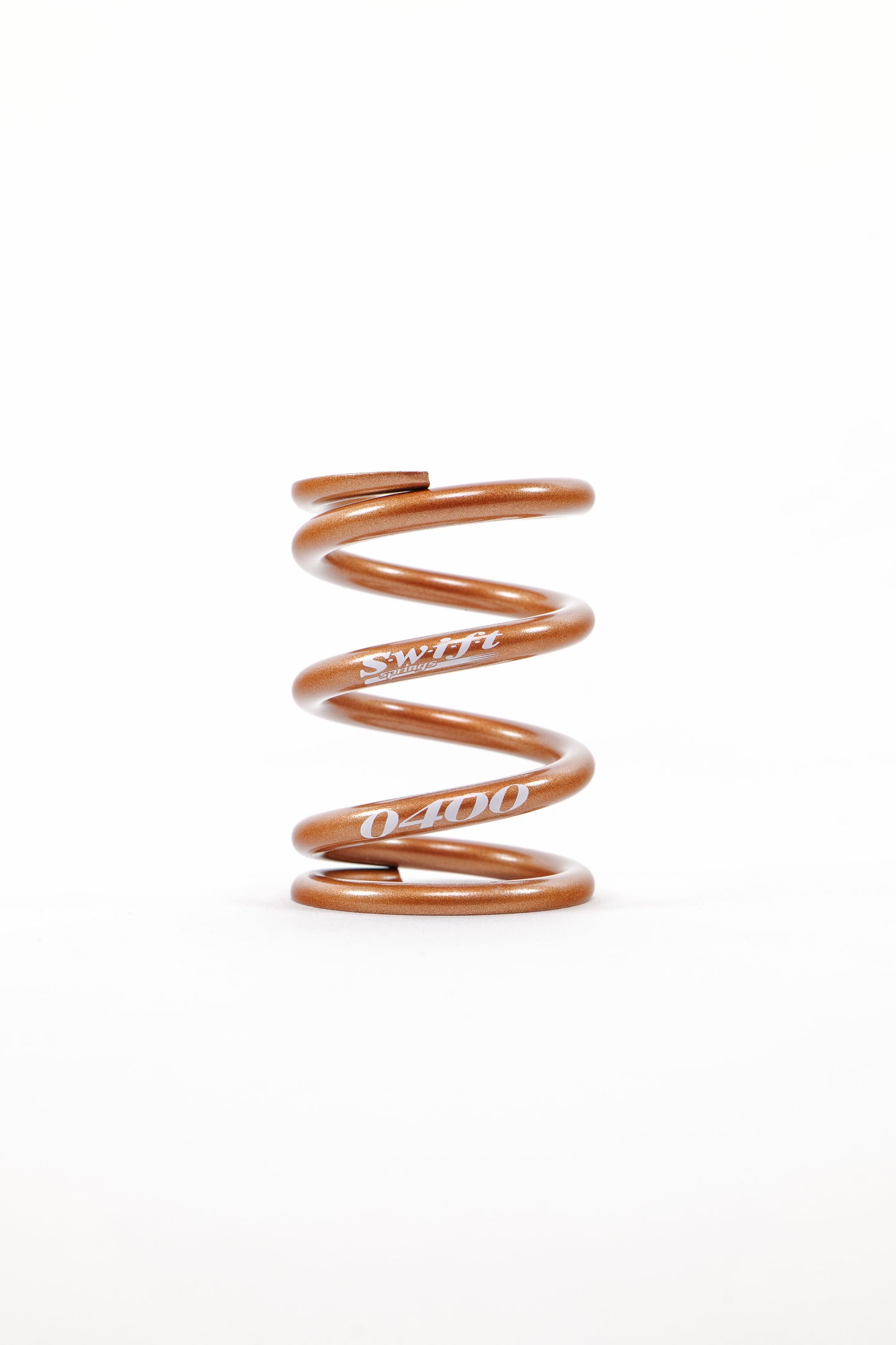
Swift Springs Introduces High-Performance Round Wire Bump Springs for Dirt Track Racing

When Suspension Travel Gets to the Limit, Bump Spring Control Matters
As a race car approaches the end of its available suspension travel, every component in the system becomes increasingly important.
This is where a properly selected bump spring can become a valuable tuning tool.
Swift Springs has developed a new 3-inch Round Wire Bump Spring designed for demanding motorsports applications, including Dirt Track Racing and Dirt Late Models. Built from the same material used in Swift's Bulletproof Spring Series, these bump springs are designed to provide a high-rate, predictable response as the suspension approaches the limit of its travel.
Available in two high-rate options, the new series gives racers another tool for controlling suspension compression when the car reaches the final portion of its working range.
Designed for the Final Stage of Suspension Travel
A bump spring isn't simply another spring in the suspension package.
Its job begins as the suspension approaches the end of its available travel, providing additional resistance to help control compression before the suspension reaches its mechanical limit.
For Dirt Late Model racers and other applications where suspension travel can become critical, this additional control can be an important part of the overall setup.
Swift's new Round Wire Bump Springs are designed with a 1.625-inch inner diameter and 3-inch overall length, providing a compact solution for applications where high-rate bump control is required.
The result is a bump spring designed to add significant resistance as the suspension reaches the limit without relying solely on the primary spring to control the final portion of travel.
Built From Swift's Bulletproof Spring Material
These new bump springs are manufactured using the same material used in Swift Springs' Bulletproof Spring Series.
Swift's focus on spring material and manufacturing is a major part of its approach to suspension development. The material, spring design, and intended application all play a role in producing a predictable suspension component.
For racers, that means the bump spring isn't simply selected by its rate. Its physical dimensions, usable travel, load capacity, and interaction with the rest of the suspension package all need to be considered.
Two High-Rate Options for Demanding Applications
Swift offers the new Round Wire Bump Spring in two rate options, giving racers the ability to choose the level of additional resistance appropriate for their application.
The two options are:
+030-163-400 – 400 rate
+030-163-600 – 600 rate
These higher-rate options are designed for applications where additional compression control is needed as the suspension approaches the end of its travel.
As with any bump spring, the correct selection should be based on the complete suspension package, including the primary spring, shock travel, installed height, available travel, and the behavior of the car on track.
Spec Sheet
| Part Number | Rate | Inner Diameter | Usable Stroke | Max Stroke | Max Load |
|---|---|---|---|---|---|
| 030-163-400 | 400 | 1.625" | 1.4" | 1.9" | 741 lbs |
| 030-163-600 | 600 | 1.625" | 1.3" | 1.8" | 1,049 lbs |
Both springs feature the same 3-inch length and 1.625-inch inner diameter, while the higher-rate 600 option provides increased load capacity and a slightly reduced available stroke.
These differences give racers the opportunity to select the bump spring that best matches the demands of their particular setup.
A Valuable Tool for Dirt Late Models
Dirt Late Models can place significant demands on suspension travel and compression control.
As track conditions change and the car moves through different phases of the corner, maintaining control of the suspension can become increasingly important. A bump spring can provide another layer of tuning capability when the suspension reaches the final portion of its travel.
The goal isn't simply to prevent the suspension from moving.
Instead, the bump spring becomes part of the overall suspension strategy, helping the team control what happens when the car gets deep into its available travel.
That makes bump spring selection another important consideration alongside spring rate, shock package, suspension geometry, tire, and driver feedback.
Don't Tune the Bump Spring in Isolation
Like every suspension component, the bump spring should be considered as part of the complete package.
Before selecting a bump spring, racers should understand:
+Available shock travel
+Primary spring rate and length
+Bump spring installed height
+Usable bump spring stroke
+Maximum available stroke
+Load requirements
+Where the car is using its travel on track
+Driver feedback throughout the corner
The objective is to create a predictable transition as the suspension approaches the end of its travel—not simply add the highest possible rate.
Testing and documenting the car's behavior can help determine whether the bump spring is providing the desired control without creating an unwanted change in the chassis balance.
The Science of Winning: Suspension Tuning Accessories Series
Swift Springs continues to expand its Suspension Tuning Accessories lineup with purpose-built products designed to give racers more control over the details that influence suspension performance.
This new Round Wire Bump Spring series brings Swift's high-rate spring technology to another critical area of suspension tuning, providing Dirt Late Model and other motorsports teams with compact, high-performance options for controlling suspension compression at the limit.
Available in 400 and 600 rate options, these 3-inch Round Wire Bump Springs are built from the same material used in Swift's Bulletproof Spring Series and are designed for demanding racing applications.
When the suspension gets to the limit, make sure you have the right tool to control it.
Contact your local Swift Springs dealer or visit Swift Springs to learn more about the latest Suspension Tuning Accessories and bump spring options.