The Swift Springs Advantage
The Swift Springs Advantage
Material - Design - Rate Retention
Built from the metal up
Most springs start as wire. Swift springs start with metallurgy.
We are a materials company that makes springs. Our R&D starts with the alloy: what it needs to do under load, how fast it needs to return, how it should hold up through a season of use. We develop that alloy, we produce it, and we wind the spring from it in our own facilities. Material and winding method are developed together; one is designed for the other.
The result is a spring engineered from the inside out, not one adapted to whatever steel was available.
Purpose-built material
Our staple alloy is HS5.TW. It was developed for road racing, where a spring that returns to position quickly keeps the tire loaded and the car planted. The same property that produces grip on a circuit produces compliance on a rough road: the spring follows the surface instead of skipping over it. HS5.TW is where we start, not where we stop. When a motorsports problem calls for a spring to behave differently, we blend from the staple alloy to create the material that spring line or application needs. You don’t choose the material; our engineers do, when the spring is designed. What never changes: every rate within a product line is made from the same alloy, so the springs on the front of your car and the springs on the rear are the same metal, made the same way.
One material decision per application
-
Road Racing & Track Cars
HS5.TW, tuned for response and mechanical grip.
-
Off-road & Circle Track
Alloys blended for extreme travel and season-long durability.
-
Street Performance
The balance of ride quality and precision that first made Swift a favorite among enthusiasts.
Designed around the metal
A stronger alloy is only an advantage if the spring is designed to use it. Swift’s winding technology is where that happens.
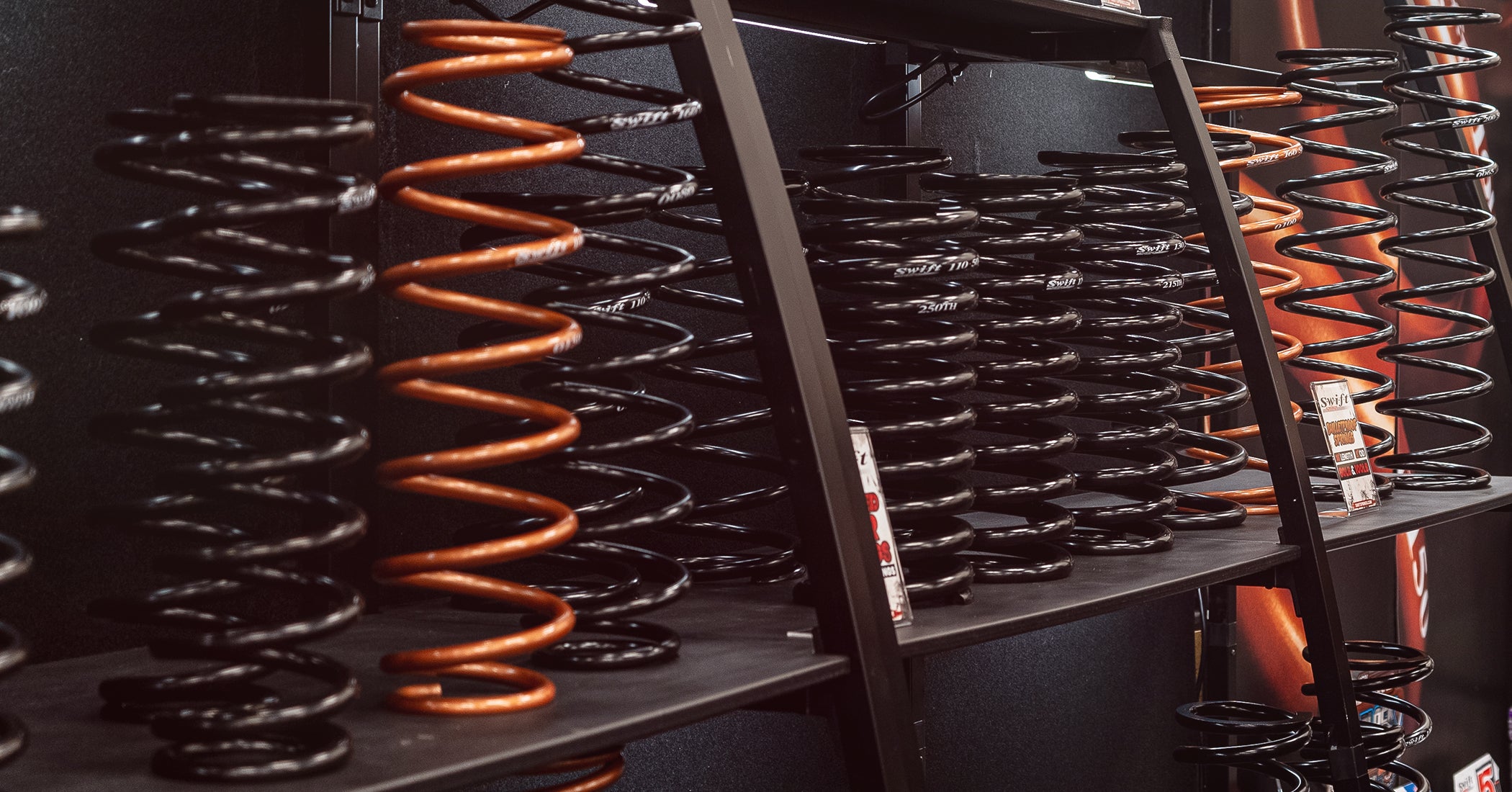
Because HS5.TW reaches a given rate with fewer coils and thinner wire, our engineers have room to shape the spring for the job: a straight coil where packaging is simple, a barrel profile where the spring has to clear a shock body and a lower ball joint, a 2.5”-to-5” taper where the spring needs to compress straighter and gain stroke, a progressive wind where the rate is meant to rise through the travel. Every dimension is deliberate: free length, block height, pitch, and end shape are set for the rate, the stroke, and the space the spring has to live in.
See the difference tested
MotoIQ’s Mike Kojima, a former Nissan and TRD engineer, swapped only the springs on a daily-driven STI: same coilovers, same rate, same ride height. Watch what changed.
On the bench with MotorHead Garage
Swift Motorsports Director Frank Simonetti joined Dave Dobson on Motorhead Garage (August 2026) to explain the engineering behind the result: why a company that makes its own material can tailor a spring to the job, how a dirt Late Model spring stack and a C8 Corvette street spring come from the same development work, and what a sagging spring does to alignment and tire wear. As Frank puts it, the spring is the only thing that puts load into the tire, and that’s where grip comes from.
The difference you can feel
Every Swift spring is built to deliver:
-
Faster response
The alloy returns to position quickly, so the spring and damper work together instead of fighting each other.
-
Lighter
A stronger alloy reaches the same rate with fewer coils and thinner wire, so a Swift spring carries less mass for the damper to control.
-
More stroke
Fewer coils leave more travel before the coils touch, so you get more usable stroke at the same rate and length.
-
A rate you can trust
Swift tests spring rate through the stroke, not at a few points, and holds it within 2% of the rate on the label through the working travel of a linear spring. On a progressive spring, the curve you get is the curve we designed.
-
A rate that holds
Swift springs are built to keep their rate and free length through the season, cycle after cycle, so your setup stays your setup.
Often imitated. The original.
In 2001, Swift brought the first barrel springs to 2.5” ID circle track coilovers. Other manufacturers followed, and the barrel spring is now the industry standard. In 2012, Swift launched the first true progressive springs for motorsports. In 2015, Swift introduced the 2.5”-to-5” coilover spring, 2.5” ID at one end and 5” OD at the other, so the spring compresses straighter and gains stroke. And when Swift arrived, nobody made high-stroke linear springs. Twenty years on, the industry builds to the standard Swift set. Every Swift spring is still thought through in every dimension: rate, stroke, weight, and how it behaves in the car.
Finished to protect the metal
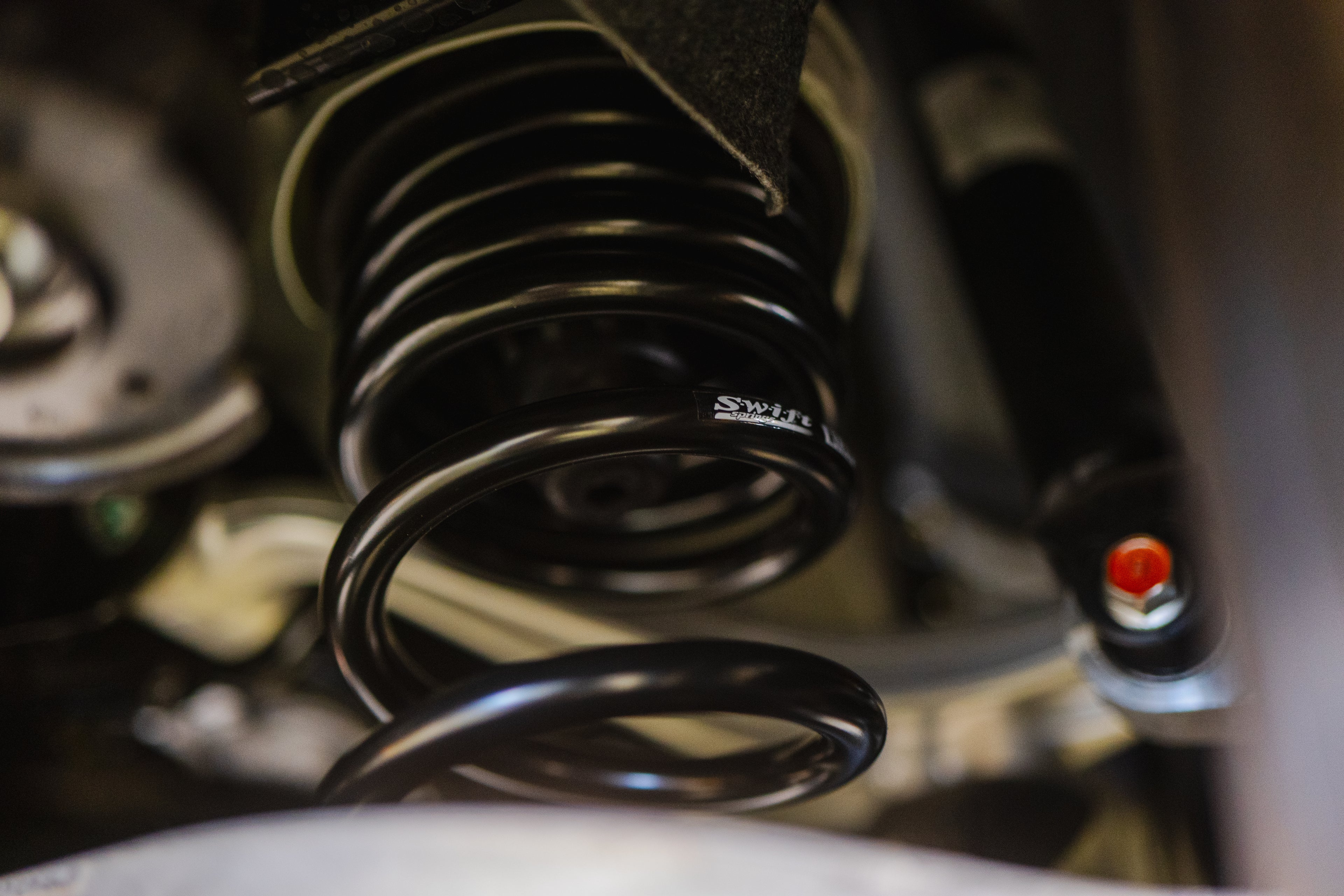
The work doesn’t stop at winding. Most finishes add material on top of the spring, and that material changes how the spring behaves. Swift developed a proprietary coating process so the finish protects the steel’s temper and resists corrosion without altering the spring rate. The properties engineered into the alloy are the properties you get on the car, and keep getting.
Proven worldwide
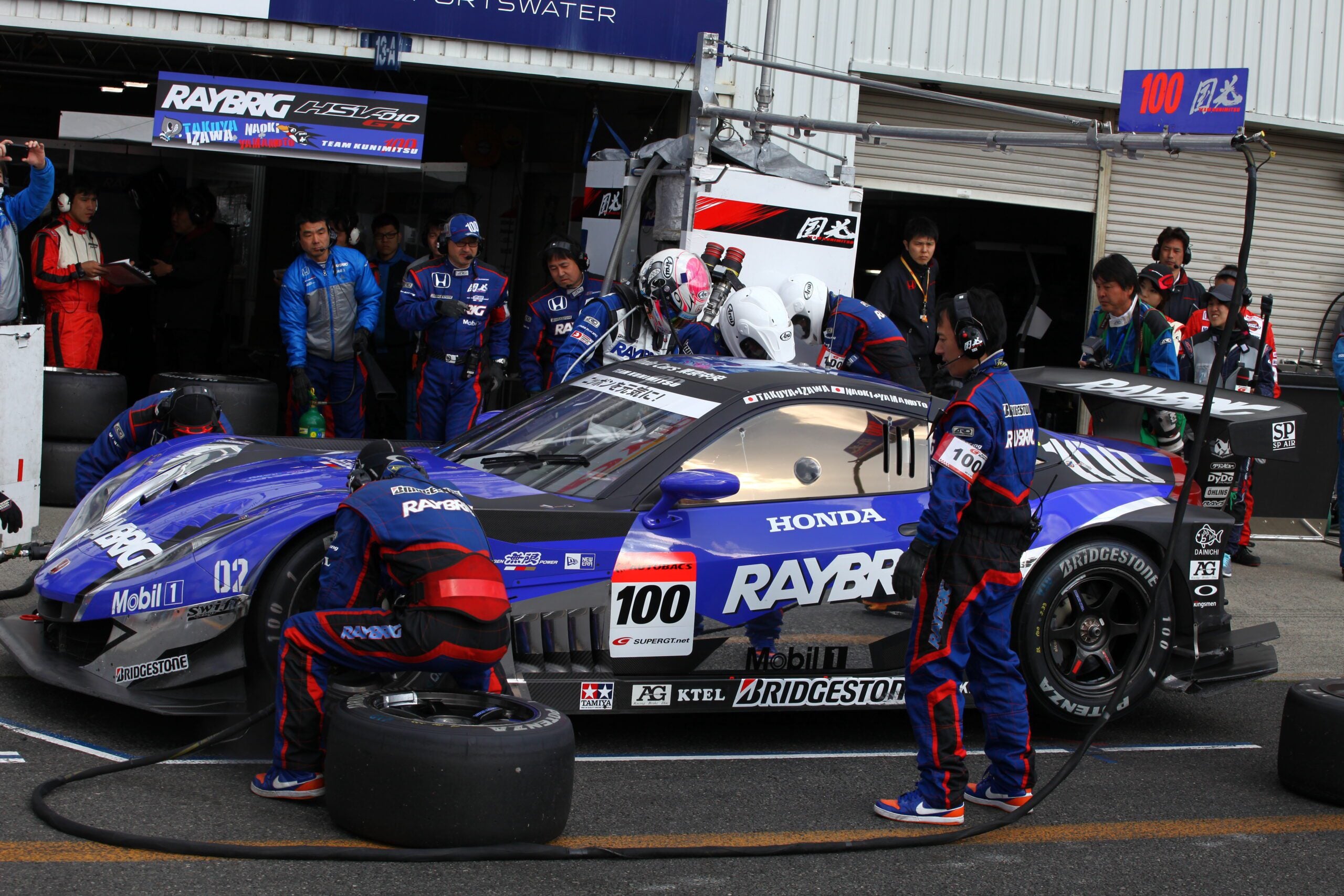
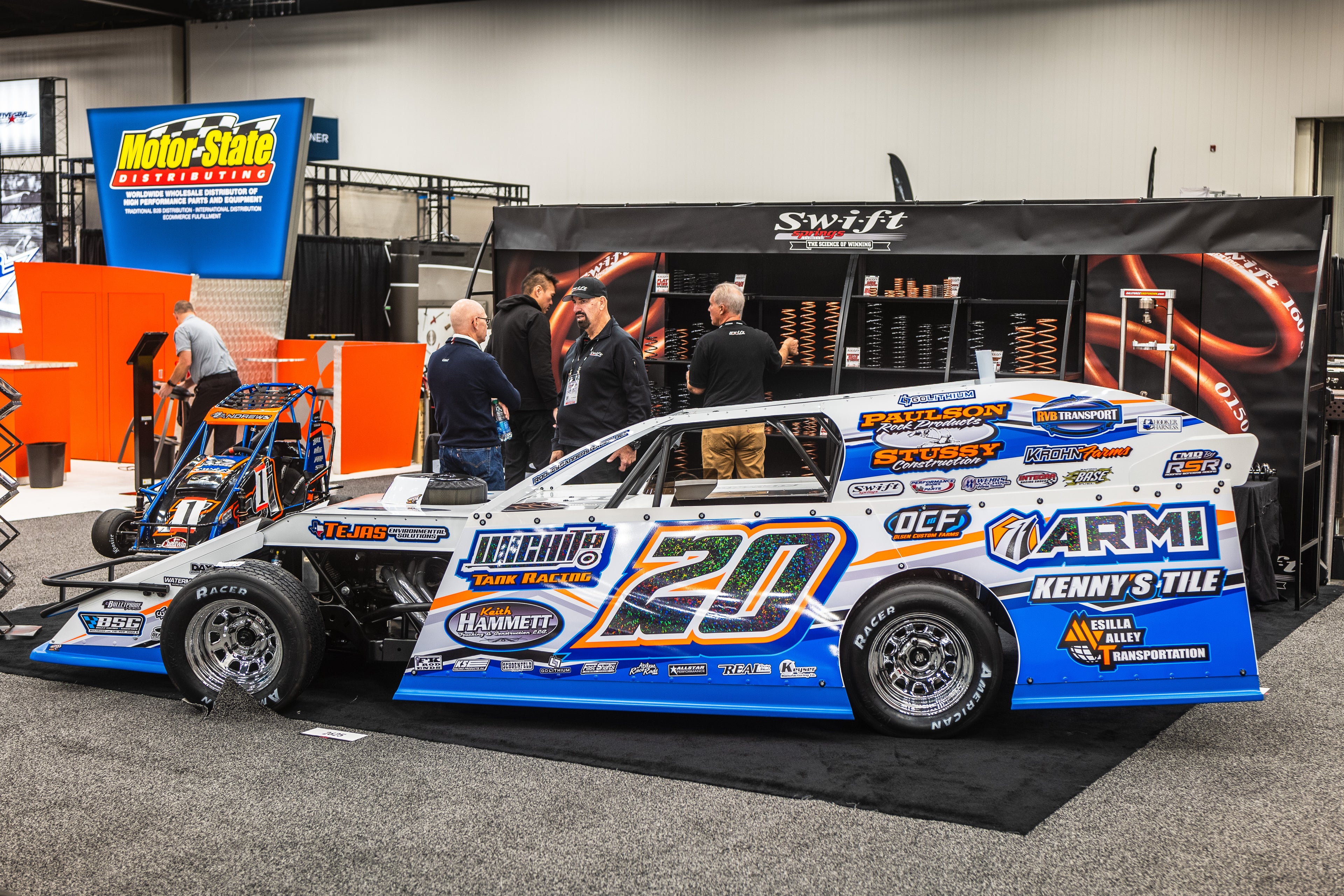
From Le Mans and Super GT to Late Models and Modifieds on dirt and asphalt, championship teams run Swift for one reason: RESULTS. The same engineering is in the spring under your street or track car.

The origin of Swift Springs
Swift Springs was founded in 1997 in Tokyo as the motorsports division of Tohatsu (Tokyo Hatsujo Manufacturing Co., Ltd.), a spring maker for more than 100 years. The name is an acronym: Springs With Intelligence From Tohatsu.
The goal was to build the next generation of motorsports coil springs and to set the standard on four counts: the lightest weight, the greatest durability, the most linear rate, and the largest usable stroke.
Swift’s first program was a Nissan Skyline GT-R in Japan’s Super Taikyu endurance series in 1998. Hands-on involvement in racing took the company from there to championship teams around the world. As part of Tohatsu, whose springs serve industries from light manufacturing to heavy equipment, Swift draws on engineering and research resources few motorsports spring companies can match.
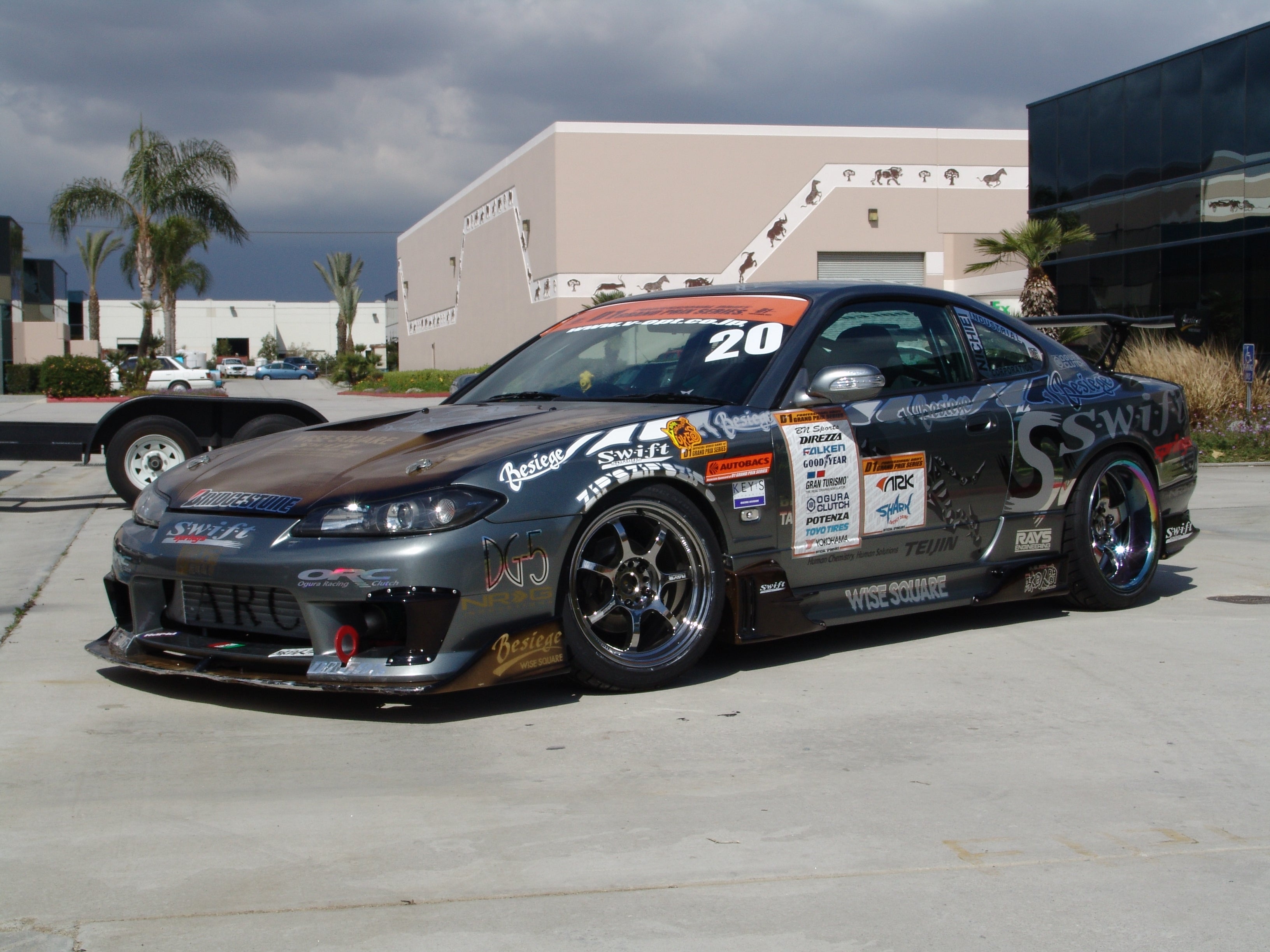
Swift has supplied championship teams in:
-
- Le Mans 24 Hours
- Nürburgring 24 Hours
- Super GT (JGTC)
- Super Taikyu Series
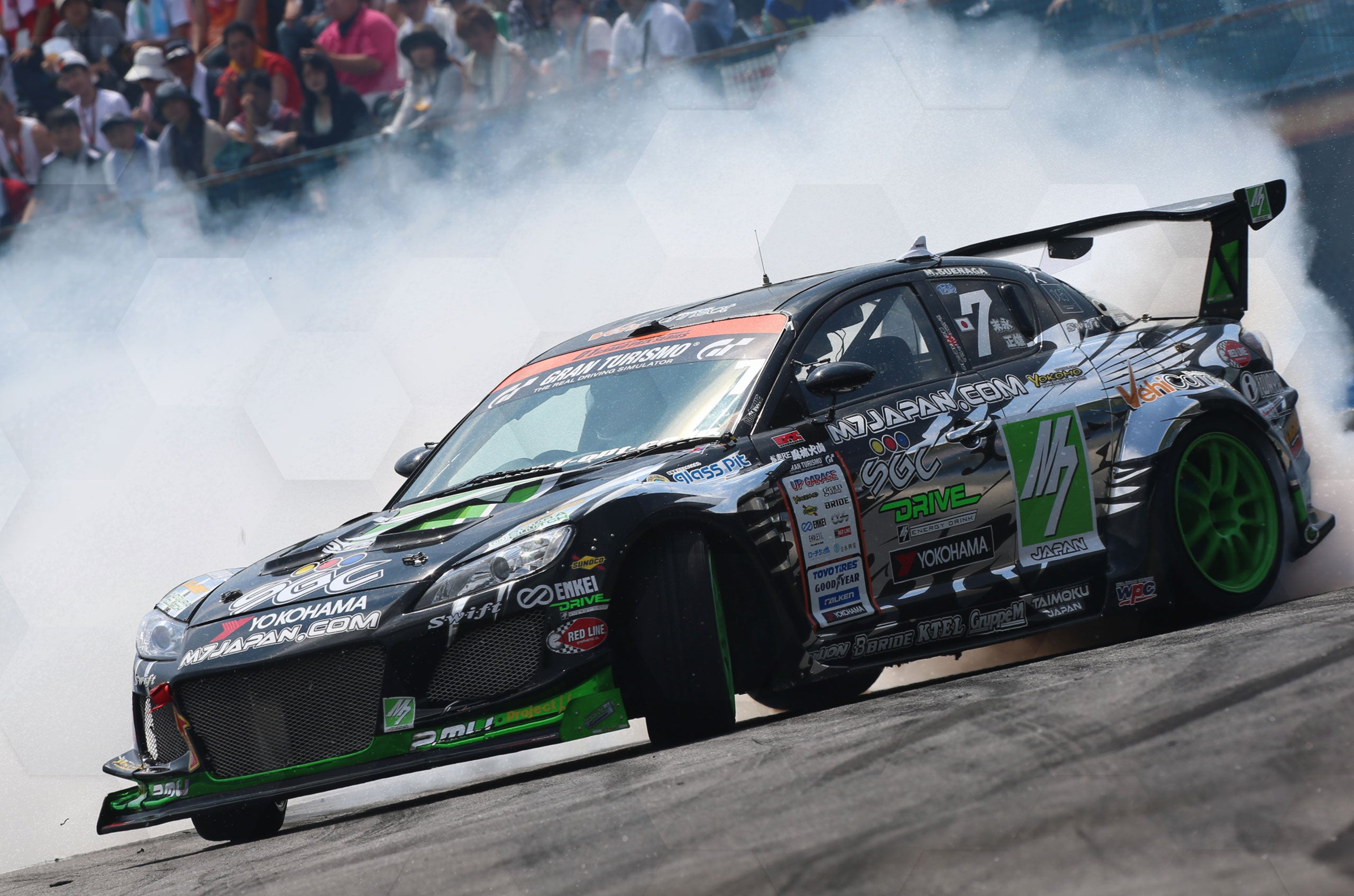
- D-1 World Grand Prix
-
- Formula 3
- Formula 3000
- Formula Toyota
- Circle Track Racing, asphalt and dirt
- Late Models and Modifieds across the United States and Canada
Frequently asked questions
Why do Swift springs feel different at the same rate?
Spring rate describes how much force it takes to compress a spring. It doesn’t describe how quickly the spring returns, how much it weighs, or how much travel it has before the coils touch. Swift’s alloy is developed for fast return and high strength, so at the same rate a Swift spring returns to position faster and keeps the tire loaded over bumps. That is the difference drivers describe as a smoother ride and more grip.
What is HS5.TW?
HS5.TW is Swift’s staple spring alloy, developed and produced in-house. When a spring line or application calls for different behavior, Swift blends from HS5.TW to create the material it needs. The material for each spring is determined by Swift’s engineers when the spring is designed; it is not a customer option.
How does Swift test spring rate?
Swift measures spring rate through the stroke of the spring rather than at a single compression point. Many manufacturers test at one point, and each chooses a different one, so a spring labeled linear may not deliver the same rate elsewhere in its travel. Swift holds linear springs within 2% of their labeled rate through the working stroke, which means the rate you set up the car around is the rate the car sees.
Are all Swift springs linear?
No. Most Swift springs are linear, and those are held to a consistent rate through the working travel. Swift also makes progressive springs, introduced for motorsports in 2012, where the rate is designed to rise as the spring compresses. The product page for each spring states which it is.
Do Swift springs sag or lose rate?
Swift springs are engineered and finished to hold their rate and free length through repeated cycles. Racers who switch to Swift typically report far less readjustment of ride height and corner weights after the first sessions.
Can I run Swift springs on only two corners?
You can, but Swift springs behave differently from other brands, so we recommend running them on all four corners to get balanced results.
Who makes Swift Springs?
Swift Springs is a division of Tohatsu (Tokyo Hatsujo Manufacturing Co., Ltd.), a spring manufacturer for more than 100 years. Swift develops and produces its own alloy and winds every spring in its own facilities in Japan. Swift Springs USA in Chino Hills, California, serves customers worldwide outside Japan.


Swift Springs USA. Built from the metal up.